
Hand, Foot and Mouth Disease: What Parents Need to Know
September 25, 2026
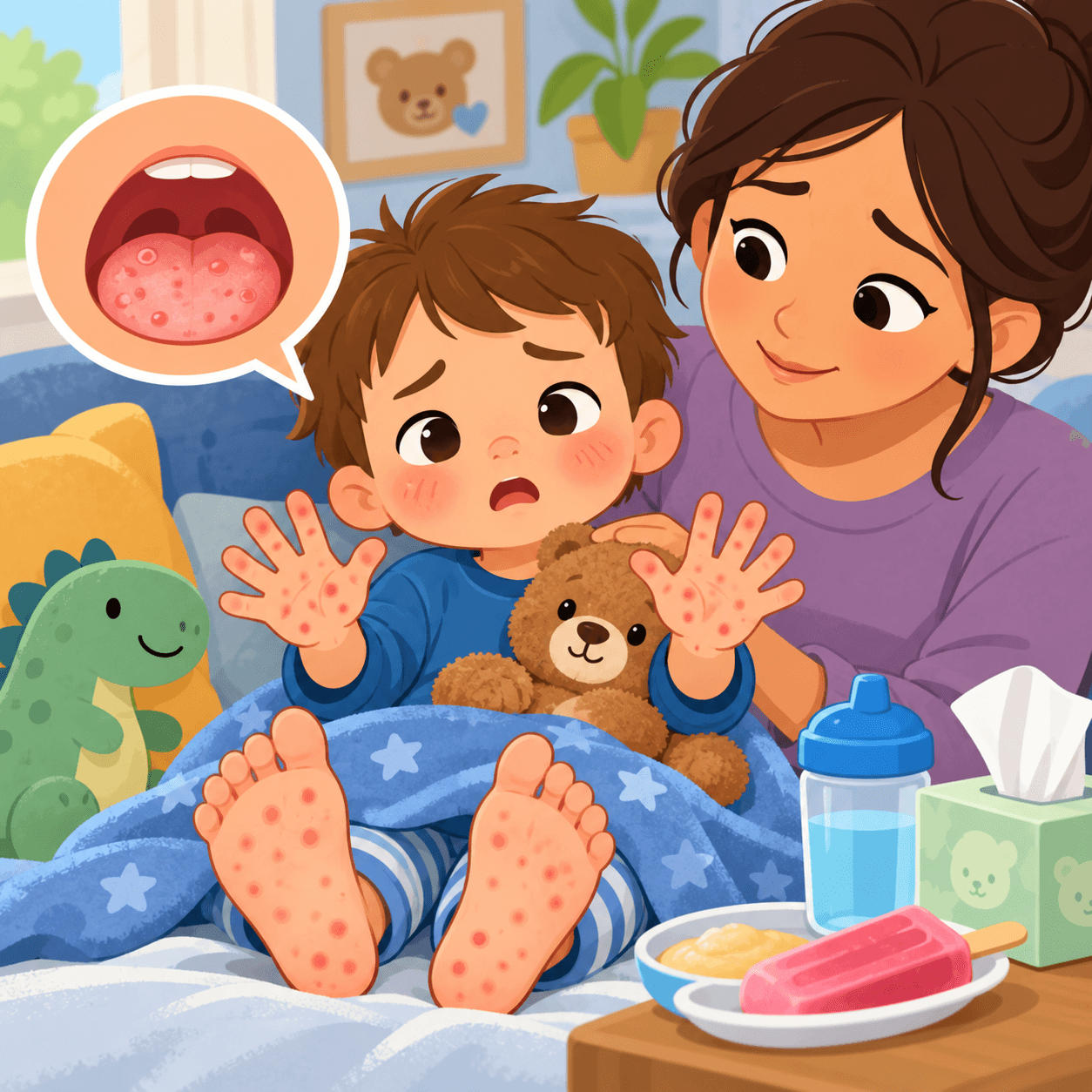
If you have a young child in daycare or school, there’s a good chance you’ve heard of hand, foot and mouth disease. It tends to spread quickly among children, especially when they’re spending more time together in classrooms, playgrounds, and childcare settings.
The name can sound a little alarming, but hand, foot and mouth disease is a common viral illness that is usually mild and clears up on its own. Still, it can make for a pretty uncomfortable few days, and knowing what to expect can make it easier to care for your child at home.
What Is Hand, Foot and Mouth Disease?
Hand, foot and mouth disease, often shortened to HFMD, is a contagious illness caused by a group of viruses known as enteroviruses. It’s most common in children under 5, although older children, teenagers, and adults can get it too.
It spreads easily through close contact, respiratory droplets, saliva, fluid from blisters and stool. This is one reason outbreaks can move quickly through daycares and classrooms where children share toys, play closely together and may not always be great about washing their hands.
What Does It Look Like?
HFMD doesn’t always look the same from one child to another. For some children, it begins with symptoms that could easily be mistaken for another common childhood virus.
Early symptoms may include fever, sore throat, decreased appetite, tiredness, or just generally not feeling well.
Within a day or two, small red spots or painful sores may appear inside the mouth, including on the tongue and gums. A rash may also develop on the palms of the hands and soles of the feet. Spots can sometimes appear on the legs, arms, buttocks or other areas as well.
The rash may be flat, raised or develop small blisters. Despite the name, children don’t necessarily have symptoms on all three areas… the hands, feet and mouth.
Keeping Your Child Comfortable
There isn’t a specific treatment that makes hand, foot and mouth disease disappear immediately. Because it’s caused by a virus, antibiotics won’t help. Most care is focused on keeping children comfortable while their immune system clears the infection.
One of the biggest concerns is making sure your child continues to drink enough fluids. Mouth sores can make eating and drinking painful, so children may suddenly refuse things they normally enjoy.
Cold drinks, ice pops, and soft foods can be easier to tolerate. Avoid foods that are acidic, salty, or spicy if they seem to irritate your child’s mouth.
If your child is uncomfortable or has a fever, talk with your pediatrician about appropriate over-the-counter pain or fever medication for their age and weight.
How Long Is It Contagious?
HFMD is especially contagious during the first several days of illness, but the virus can remain in the body for longer, including in stool for several weeks after a child feels better.
Good handwashing is especially important after diaper changes, using the bathroom, and before preparing or eating food.
Clean frequently touched toys and surfaces regularly, and don’t let children share cups, utensils, or other items that come into contact with the mouth.
Can My Child Go Back to School or Daycare?
This is one of the first questions parents usually have.
Return-to-school policies can vary between schools and childcare centers. In general, children may be able to return once they are fever-free, feel well enough to participate normally and aren’t experiencing uncontrolled drooling because of mouth sores. Your child’s school, daycare, or pediatrician may have additional recommendations depending on the situation.
It’s always a good idea to check your school’s illness policy before sending your child back.
When Should I Call the Pediatrician?
Most cases of hand, foot and mouth disease improve without complications, but there are times when it’s important to check in with your child’s pediatrician.
Call if your child isn’t drinking well, is urinating less than usual, has a fever that is persistent or concerning, seems unusually sleepy or difficult to wake, has severe symptoms, or simply isn’t improving as expected.
Babies and children with certain medical conditions may also need to be evaluated sooner.
If you’re unsure whether a rash or mouth sores are caused by hand, foot and mouth disease, your pediatrician can help determine what’s going on.
A Few Uncomfortable Days, Then Back to Normal
Seeing a rash or painful mouth sores on your child can be concerning, especially when an illness seems to be making its way through school or daycare. Fortunately, most children with hand, foot and mouth disease recover well with rest, fluids and a little extra comfort at home.
And as with many childhood illnesses, some of the simplest habits still make a difference: plenty of handwashing, cleaning frequently touched surfaces and keeping sick children home when they’re not feeling well.
At Holly Springs Pediatrics, we’re here to support your family’s health all year round. If you have any questions or concerns about your child’s skin, give us a call. We’re happy to help you find the best ways to keep your little one comfortable and healthy this season.
Holly Springs Pediatrics is committed to providing quality care to your kids at all times on a wide array of subjects. For more information or to get in contact with our office, call (919) 249-4700 to schedule an appointment.