
Why Does My Child Keep Catching Colds?
October 9, 2026
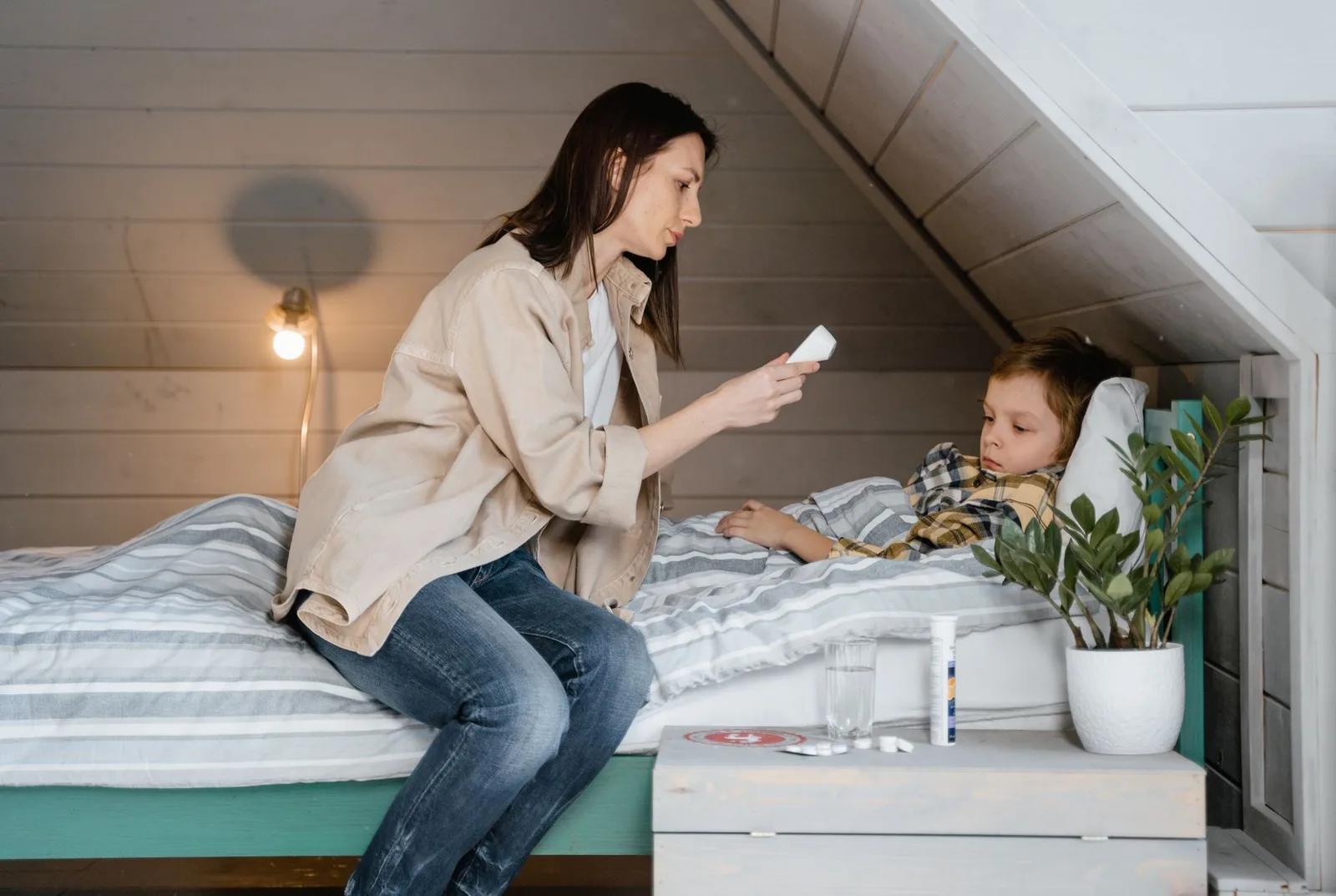
If it feels like your child is catching one cold right after another, you’re not alone. Many families in Holly Springs, Apex, Cary, and surrounding areas wonder the same thing, especially during the school year. The good news is that frequent colds are usually a normal part of childhood and a sign that your child’s immune system is learning and developing.
The Short Answer
Young children can catch anywhere from 6 to 12 colds per year, especially if they’re in daycare or preschool. Their immune systems are still learning to recognize and fight off the many viruses that cause colds. Most colds are harmless and resolve on their own within 7 to 10 days. Concern is warranted if your child has difficulty breathing, signs of dehydration, a very high or prolonged fever, or if they seem unusually sick or lethargic.
What’s Normal for Their Age
The number of colds your child gets often depends on their age and exposure to other children. Here’s what to expect:
- Infants (0 to 12 months): Newborns have some immune protection from their mother, but this fades after a few months. Infants can get 4 to 8 colds in their first year, especially if older siblings bring germs home.
- Toddlers and preschoolers (1 to 5 years): This age group tends to get the most colds, often 8 to 12 per year. Daycare and preschool expose them to many new viruses, and they’re still learning not to put everything in their mouths or touch their faces constantly.
- School-age children (6 to 12 years): Colds become less frequent, usually 4 to 6 per year, as their immune systems mature and they develop immunity to common viruses.
- Adolescents (13 to 22 years): Teenagers generally get fewer colds, around 2 to 4 per year, similar to adults.
According to the American Academy of Pediatrics, it’s common for young children to have several colds in a row, especially from fall through spring.
What You’ll Notice
Cold symptoms in children are usually mild at first and can include:
- Runny or stuffy nose (clear, white, yellow, or green mucus)
- Sneezing and coughing
- Mild sore throat or scratchy voice
- Low-grade fever (usually under 101°F, though it can be higher in toddlers)
- Fussiness, tiredness, or trouble sleeping
- Decreased appetite
Symptoms often peak around days 3 to 5 and then gradually improve. Mucus color can change throughout a cold and doesn’t always mean a bacterial infection.
What Could Be Causing It
Exposure to Many Different Viruses
More than 200 different viruses can cause the common cold, and each one is a new challenge for your child’s immune system. Every time your child catches a cold, their body learns to recognize that specific virus. Over time, they build immunity to more and more of them, which is why colds become less frequent as children grow.
Daycare, Preschool, and School Settings
Group settings are the most common reason children catch frequent colds. Close contact, shared toys, and normal childhood behaviors (like touching faces and putting hands in mouths) make it easy for viruses to spread. This exposure is a normal part of growing up and helps build a strong immune system.
Season and Weather
Cold viruses circulate more during fall and winter, partly because people spend more time indoors in close quarters. Dry indoor air can also make nasal passages more vulnerable to infection.
A Developing Immune System
Your child’s immune system is still maturing. Each infection is a learning experience that helps their body respond faster and more effectively in the future. Frequent colds in early childhood are a sign that this process is happening normally.
When Does It Stop Being Normal?
While frequent colds are typical, there are times when it’s worth checking in with your pediatrician. You may want to schedule a visit if:
- Your child’s colds last longer than 10 to 14 days each time
- Symptoms seem unusually severe or are getting worse instead of better
- Your child has trouble gaining weight or seems constantly unwell
- You notice ear pain, significant sinus pressure, or other complications with each cold
- Your child is missing a lot of school or activities due to illness
Our team at Holly Springs Pediatrics is here to help families from Holly Springs, Fuquay Varina, Morrisville, New Hill, and nearby communities understand what’s typical and when further evaluation is helpful.
When to Call the Pediatrician, and When It’s an Emergency
Knowing when to seek care can give you peace of mind. Here’s a guide based on your child’s symptoms and age:
Monitor at home if:
- Your child has mild cold symptoms (runny nose, cough, low fever) and is still eating, drinking, and playing fairly normally
- Symptoms are improving after a few days
- Your child is over 3 months old and the fever is low-grade (under 101°F) and responds to comfort measures
Schedule a sick visit if:
- Cold symptoms last longer than 10 days without improvement
- Your child has ear pain, sinus pain, or a persistent headache
- Symptoms improve and then suddenly get worse again
- Your child has a fever that lasts more than 3 days
- You have questions or concerns about how your child is doing
Seek same-day or urgent care if:
- Your child (over 3 months) has a fever of 104°F or higher
- Your child is not drinking enough and you see fewer wet diapers or trips to the bathroom
- Your child seems very tired, cranky, or just not themselves
- Breathing seems faster or more difficult than usual
Go to the emergency room or call 911 if:
- Your newborn (under 3 months old) has any fever of 100.4°F (38°C) or higher
- Your child has significant trouble breathing, including flaring nostrils, retractions (skin pulling in between ribs), grunting, or blue lips
- Your child is extremely lethargic, difficult to wake, or unresponsive
- Your child has a seizure
- You see signs of severe dehydration (no tears, very dry mouth, no urine for 8 hours or more, sunken soft spot in infants)
- Your child has a rash that does not fade when you press on it, especially with a fever
How It’s Evaluated
When you bring your child in for a sick visit, the pediatrician will ask about symptoms, how long they’ve lasted, and whether your child is eating, drinking, and acting normally. They’ll check your child’s temperature, listen to their lungs and heart, look in their ears and throat, and feel their neck for swollen glands.
Most colds don’t require any testing. If the provider is concerned about a secondary infection (like an ear infection, sinus infection, or pneumonia), they may recommend additional evaluation. The goal is to understand what’s happening and help your child feel better.
Treatment and Management
Colds are caused by viruses, so antibiotics won’t help and aren’t recommended unless a bacterial infection develops as a complication. Most colds get better on their own with supportive care. Our providers can offer guidance tailored to your child’s age and symptoms during a sick visit.
Supportive care focuses on keeping your child comfortable while their immune system does its work. Rest, fluids, and age-appropriate comfort measures are the foundation of care. For young infants, gentle suctioning of the nose and keeping them upright during feedings can help. Older children may benefit from a cool-mist humidifier and soothing foods or drinks.
If symptoms suggest a complication like an ear infection, the pediatrician will discuss the best approach based on your child’s age, symptoms, and overall health.
What You Can Do at Home
While you can’t cure a cold, you can help your child feel more comfortable:
- Encourage plenty of fluids. Breast milk or formula for babies, and water, broth, or diluted juice for older children.
- Use saline nose drops and a bulb syringe or nasal aspirator to gently clear a stuffy nose in infants and toddlers.
- Run a cool-mist humidifier in your child’s room to keep the air moist.
- Keep your child’s head slightly elevated during sleep if they’re old enough (never use pillows for infants under 12 months).
- Offer warm liquids like soup or warm water with a little honey (only for children over 12 months) to soothe a sore throat.
- Wash hands often and teach your child to cover coughs and sneezes with their elbow.
- Let your child rest as much as they need.
If you have questions about what’s safe or helpful for your child’s age, our team is always happy to talk with you.
From a Pediatrics Perspective
It’s easy to worry when your child seems to be sick all the time, but frequent colds in early childhood are a sign of a normal, developing immune system. Each cold your child catches helps their body learn to fight off infections more effectively in the future. This process is an important part of growing up.
Some parents worry that green or yellow mucus means their child needs antibiotics, but mucus color alone doesn’t indicate a bacterial infection. It’s normal for mucus to change color as a cold progresses. What matters more is how your child is acting overall and whether symptoms are improving.
You’re not doing anything wrong if your child gets a lot of colds. You can’t shield them from every germ, and exposure to common viruses is part of building a healthy immune system. The fact that you’re paying attention and seeking guidance when something feels off shows you’re doing exactly what your child needs.
Questions to Ask at the Visit
If you’re at a sick visit or well-child checkup and want to talk about your child’s frequent colds, consider asking:
- How many colds per year are normal for my child’s age?
- Are there signs I should watch for that would mean this is more than a cold?
- What can I do at home to help my child feel better?
- When should I call or schedule a follow-up?
- Are there ways to reduce the number of colds my child gets?
- Could my child’s symptoms be related to allergies instead?
Supporting Your Child Through Cold Season
Frequent colds are a normal part of childhood, especially in the toddler and preschool years. While it can be exhausting for the whole family, this is how your child’s immune system learns and grows stronger. Most colds will resolve on their own with rest, fluids, and your care.
If you’re ever uncertain, or if your child’s symptoms seem different or more severe than usual, Holly Springs Pediatrics is here to help. We welcome families from Holly Springs, Apex, Cary, Fuquay Varina, Morrisville, New Hill, and surrounding areas. Our team offers sick visits, well-child checkups, and guidance whenever you have questions. You can request an appointment anytime, and we’ll work with you to keep your child healthy and comfortable through every season.
Frequently asked questions
How many colds per year are normal for a toddler in Holly Springs?
Toddlers and preschoolers commonly get 8 to 12 colds per year, especially if they attend daycare or preschool. This is a normal part of immune system development. If your toddler’s colds last longer than usual or seem unusually severe, Holly Springs Pediatrics can help evaluate whether anything else is going on.
When should I bring my child to Holly Springs Pediatrics for a cold?
You should schedule a sick visit if your child’s cold lasts longer than 10 days, if symptoms get worse instead of better, or if your child has ear pain, trouble breathing, or signs of dehydration. Any fever in a newborn under 3 months is an emergency and requires immediate care.
Does green mucus mean my child needs antibiotics?
No, green or yellow mucus is a normal part of many colds and doesn’t automatically mean a bacterial infection. What matters more is how your child is acting overall and whether symptoms are improving. Our providers can help determine if antibiotics are needed during a visit.
Can I prevent my child from getting so many colds?
While you can’t prevent all colds, frequent handwashing, teaching your child not to touch their face, and keeping them home when sick can help reduce spread. Exposure to common viruses is a normal part of building immunity. Our team at Holly Springs Pediatrics can offer age-specific guidance during well-child visits.
Why does my child get sick more often than other kids at daycare?
Every child’s immune system develops at its own pace, and some children naturally catch more colds in early childhood. Factors like age, prior exposure, and even genetics can play a role. If you’re concerned your child is sick more often than seems normal, our providers can evaluate and reassure you.
Is it normal for my baby to get a cold every month?
Infants can get 4 to 8 colds in their first year, and it may feel like one right after another, especially if they have older siblings or attend daycare. This is generally normal. If your baby has trouble feeding, breathing, or seems very unwell, Holly Springs Pediatrics is here to help with a same-day sick visit.
What’s the difference between a cold and the flu in children?
Colds usually start gradually with a runny nose and mild symptoms, while the flu often comes on suddenly with high fever, body aches, and more severe illness. Both are caused by viruses. Our providers can evaluate your child and discuss whether testing or specific care is needed during a sick visit.
Sources
Have questions or ready to be seen?
Our team is here to help. Request a visit and we’ll get your child seen.