
Cold vs. Flu vs. RSV: How to Tell the Difference in Kids
January 1, 2026
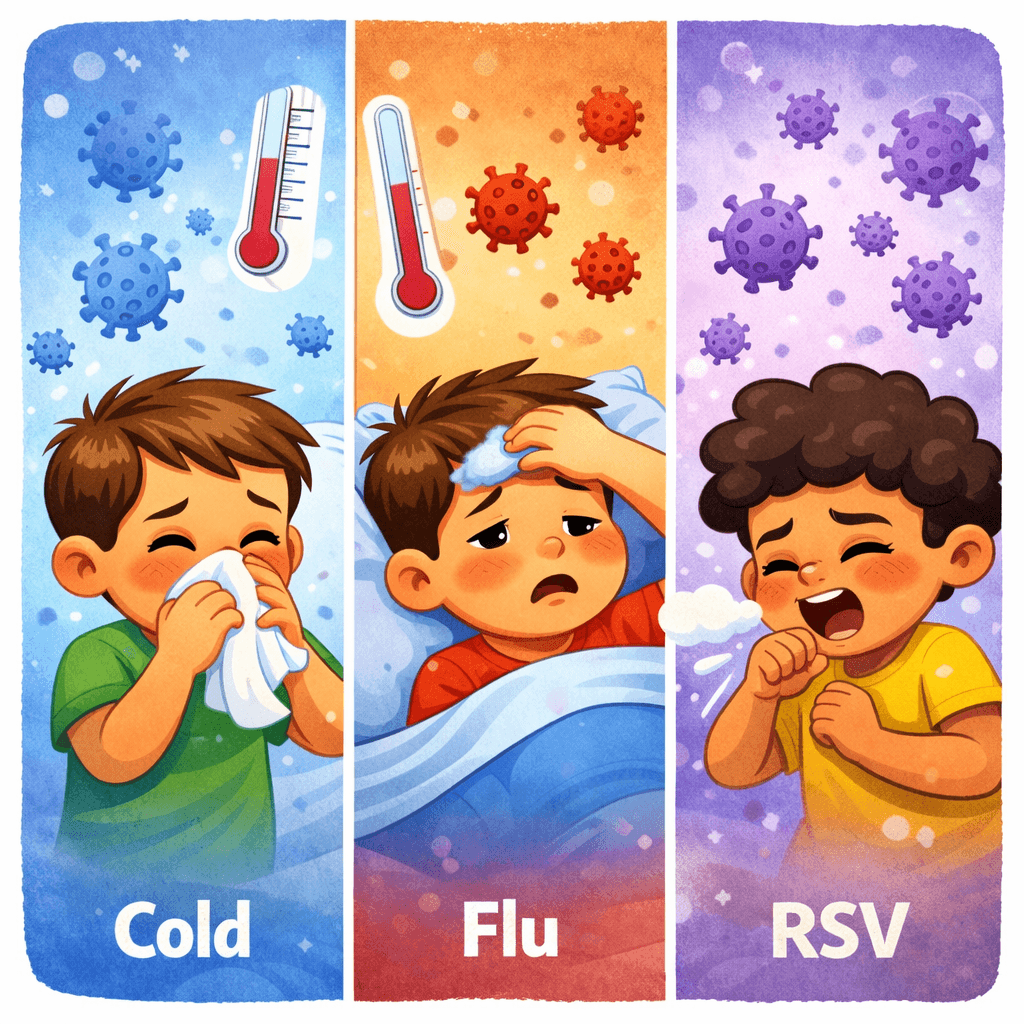
When your child wakes up congested, coughing, or running a fever, one of the first questions parents ask is:
Is this just a cold… or something more?
During fall and winter, common respiratory illnesses circulate at the same time, and many of their symptoms overlap. The good news is that most children recover well with supportive care—but knowing what you’re dealing with can help you decide how to care for your child and when to seek medical attention.
Below is a simple guide to help parents understand the differences between the common cold, flu, and RSV.
The Common Cold
Colds are extremely common in children, especially those in school or daycare. Most kids will have several colds each year.
Common symptoms include:
- Runny or stuffy nose
- Sneezing
- Mild cough
- Sore throat
- Low-grade or no fever
- Mild fatigue
What to expect:
Colds usually come on gradually and improve within 7–10 days. Children generally continue to eat, drink, and play, just at a lower energy level.
When to worry:
If symptoms last longer than 10 days, worsen instead of improve, or are accompanied by high fever or breathing difficulty, it’s worth checking in with your pediatrician.
The Flu (Influenza)
The flu tends to hit harder and faster than a cold. Children often feel sick suddenly rather than gradually.
Common symptoms include:
- Sudden high fever
- Body aches
- Headache
- Chills
- Extreme fatigue
- Dry cough
- Sore throat
What to expect:
Kids with the flu often feel miserable and may want to stay in bed most of the day. Fever and body aches can last several days, and fatigue may linger for a week or more.
When to worry:
Seek medical care if your child has trouble breathing, won’t drink fluids, has persistent high fever, or seems unusually lethargic or confused.
RSV (Respiratory Syncytial Virus)
RSV is very common and often looks like a mild cold in older children—but it can be more serious in infants and young toddlers.
Common symptoms include:
- Runny nose
- Cough
- Wheezing
- Rapid or labored breathing
- Poor feeding (especially in infants)
- Fever (sometimes mild or absent)
What to expect:
Symptoms often start mild and worsen over several days. RSV typically peaks around days 3–5 of illness.
When to worry:
Call your pediatrician right away if your child is breathing fast, pulling in at the ribs or neck, has flaring nostrils, shows bluish lips or fingernails, or has difficulty feeding.
How Parents Can Help at Home
For most viral illnesses, treatment focuses on comfort and hydration:
- Encourage fluids
- Use saline drops or sprays for congestion
- Run a cool-mist humidifier
- Allow extra rest
- Use fever reducers as directed by your pediatrician
Antibiotics do not treat viral infections, so they are usually not needed for colds, flu, or RSV.
When to Call the Pediatrician
Contact your child’s doctor if:
- Fever lasts more than 3 days
- Breathing looks labored or fast
- Your child is not drinking enough fluids
- Symptoms suddenly worsen
- You’re unsure or concerned—trust your instincts
The Bottom Line
While colds, flu, and RSV can look similar at first, paying attention to how quickly symptoms start, how severe they are, and how your child is acting can provide helpful clues. Most children recover well with supportive care, but knowing when to seek medical advice can make all the difference.issing important activities.
With fewer distractions, annual checkups often feel more relaxed, or parents and kids alike.
Staying Ahead During Cold & Flu Season
Winter is when viruses tend to circulate more easily, especially in schools and daycare settings. An annual checkup gives your pediatrician a chance to make sure your child is healthy going into the heart of the season, review symptoms to watch for, and answer questions about prevention and care.
It’s also a good opportunity to talk through what’s normal during common winter illnesses—and when it’s time to call the office.
A Chance to Check Growth and Development
Annual visits aren’t just about illness. They’re an important time to track growth, development, sleep habits, nutrition, and emotional well-being. Winter appointments allow your pediatrician to assess how your child is doing midway through the school year and catch any concerns early.
For younger children, it’s a chance to confirm milestones. For older kids and teens, it opens the door to conversations about stress, school, and overall health.
Vaccines and Preventive Care Stay on Schedule
Winter checkups help keep immunizations and preventive care up to date without the rush of back-to-school season. Staying on schedule now can help avoid last-minute appointments later when everyone is trying to squeeze visits in at the same time.
Peace of Mind Going Into the New Year
There’s something reassuring about starting the new year knowing your child’s health is on track. A winter checkup gives families clarity, answers questions that may have come up during the year, and helps set a healthy foundation for the months ahead.
Schedule When It Works for You
If your child is due for an annual visit, winter can be an ideal time to get it done before spring sports, summer plans, and busy schedules return. Preventive care is one of the simplest ways to support your child’s long-term health, and there’s no better time than now.
At Holly Springs Pediatrics, we’re here to support your family’s health all year round. If you have any questions or concerns about your child’s skin, give us a call. We’re happy to help you find the best ways to keep your little one comfortable and healthy this season.
Holly Springs Pediatrics is committed to providing quality care to your kids at all times on a wide array of subjects. For more information or to get in contact with our office, call (919) 249-4700 to schedule an appointment.