
School Lunches Made Simple: What Kids Actually Need for a Healthy Day
August 19, 2026
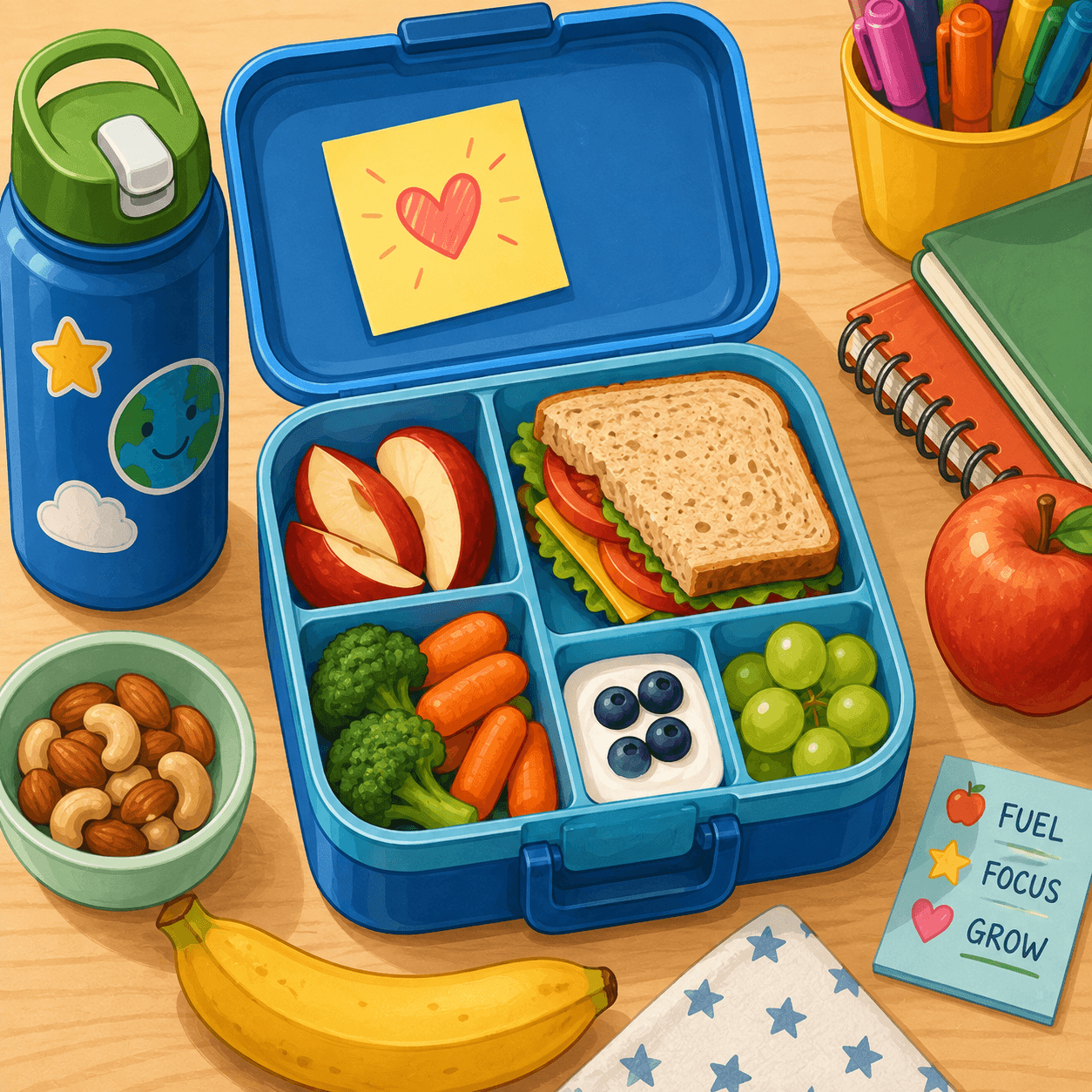
Packing school lunches can quickly become one more thing on an already busy morning. Between finding something your child will actually eat, keeping meals interesting, and trying to make healthy choices, it can feel more complicated than it needs to be.
The good news is that a nutritious school lunch doesn’t have to be elaborate. A few basic building blocks can help give children the energy and nutrients they need to make it through a busy school day.
Start With Protein
Protein helps make meals more satisfying and supports children’s growth and development. Including a source of protein at lunch can also help kids stay full through the afternoon instead of feeling hungry again shortly after eating.
Kid-friendly options might include:
- Turkey or chicken
- Eggs
- Cheese
- Greek yogurt
- Beans or hummus
- Nut or seed butter, when permitted by the school
- Leftovers such as chicken, meatballs, or another favorite protein
Don’t feel limited to traditional sandwiches. A lunch made up of several smaller foods can be just as nutritious and may be more appealing to some children.
Add Fruits and Vegetables
Fruits and vegetables provide important vitamins, minerals, and fiber. They also add different colors, textures, and flavors to a lunchbox.
The best choice is often the one your child is most likely to eat.
Try sliced apples, berries, grapes cut appropriately for your child’s age, oranges, melon, cucumbers, carrots, bell peppers, snap peas, or cherry tomatoes.
If vegetables consistently come home untouched, keep experimenting. Some children prefer them with hummus or another dip, while others may be more willing to eat vegetables they helped choose at the grocery store.
There’s no need to turn lunch into a daily battle. Regular exposure to different foods matters, even when children don’t immediately eat everything that’s offered.
Don’t Forget Carbohydrates
Kids are active, growing, and learning all day. Carbohydrates are an important source of energy, so they have a place in a balanced lunch.
Whole-grain bread, tortillas, crackers, pasta, rice, pita bread, or other grains can be paired with protein and produce to create a filling meal.
Rather than focusing on eliminating certain foods, think about creating balance across the lunchbox.
Make Water the Everyday Drink
Between recess, physical education, sports, and warm weather, children can easily get behind on fluids during the school day.
Sending a reusable water bottle and encouraging your child to drink throughout the day is a simple habit that can make a difference. Even mild dehydration can leave children feeling tired or make it more difficult to concentrate.
If your child regularly comes home with a nearly full water bottle, try talking about when they have opportunities to drink during the school day.
Snacks Can Be Simple, Too
For children who have a scheduled snack time or participate in after-school activities, a snack can help bridge the gap between meals.
Simple combinations often work best:
- Fruit and cheese
- Yogurt and berries
- Crackers and hummus
- Apple slices with an appropriate nut or seed butter
- Pretzels and cheese
- A banana and yogurt
A snack doesn’t need to look perfect to be nutritious. Ideally, it should provide enough energy to get your child to the next meal without replacing that meal altogether.
Consider How Much Time They Have to Eat
One detail parents sometimes overlook is how little time children may actually have for lunch.
A beautifully packed lunch isn’t particularly helpful if it takes too long to open, peel, assemble, or eat.
For younger children especially, practice opening lunch containers, water bottles, yogurt packages, and other foods at home. Cutting foods into manageable portions can also make it easier for them to eat within their lunch period.
If your child regularly brings most of their lunch home, ask why before assuming they didn’t like it. They may have been talking with friends, struggling with packaging, or simply run out of time.
It’s Okay to Pack Familiar Foods
School lunch doesn’t have to be the place where your child becomes an adventurous eater.
Children are navigating a busy environment filled with conversations, noise, schedules, and distractions. Familiar foods can make lunchtime easier, particularly for younger children or picky eaters.
You can continue introducing new foods at home while including dependable favorites in the lunchbox.
And yes, it’s perfectly fine if your child’s favorite lunch appears more than once a week.
What About Treats and Packaged Foods?
A healthy diet isn’t determined by a single cookie, bag of chips, or packaged snack.
Instead of labeling foods as “good” or “bad,” look at your child’s overall eating pattern. A lunch can include a fun snack alongside protein, fruit, vegetables, grains, and water.
Nutrition is about what children eat consistently over time, not whether every lunchbox looks perfect.
A Simple Lunchbox Formula
When you’re staring into the refrigerator wondering what to pack, keep it simple:
Protein + grain or carbohydrate + fruit or vegetable + water
Then add another food or snack based on your child’s appetite and schedule.
For example:
Turkey and cheese wrap + strawberries + cucumber slices + water
or
Hummus + pita bread + carrots + grapes + yogurt + water
or even:
Leftover chicken + rice + fruit + water
There is plenty of room for variety without having to reinvent lunch every morning.
Pay Attention to Your Child
Children have different appetites, preferences, activity levels, and nutritional needs. Some eat a large lunch and very little after school. Others barely touch lunch and arrive home ready for a full meal.
Instead of comparing how much your child eats with classmates or siblings, pay attention to their individual patterns.
If you’re concerned that your child is consistently skipping meals, has an extremely limited diet, isn’t growing as expected, or you’re unsure whether they’re getting the nutrients they need, bring it up with your pediatrician.
Keep the Big Picture in Mind
School lunches don’t need to be Pinterest-perfect to be healthy.
Aim for variety when you can, include foods your child enjoys, encourage water throughout the day, and remember that nutrition is built over weeks and months… not during one 20-minute lunch period.
A simple lunch that your child actually eats is often far more valuable than an elaborate one that comes home untouched.
At Holly Springs Pediatrics, we’re here to support your family’s health all year round. If you have any questions or concerns about your child’s skin, give us a call. We’re happy to help you find the best ways to keep your little one comfortable and healthy this season.
Holly Springs Pediatrics is committed to providing quality care to your kids at all times on a wide array of subjects. For more information or to get in contact with our office, call (919) 249-4700 to schedule an appointment.