
Why Kids Seem to Get Sick at the End of the School Year
May 19, 2026
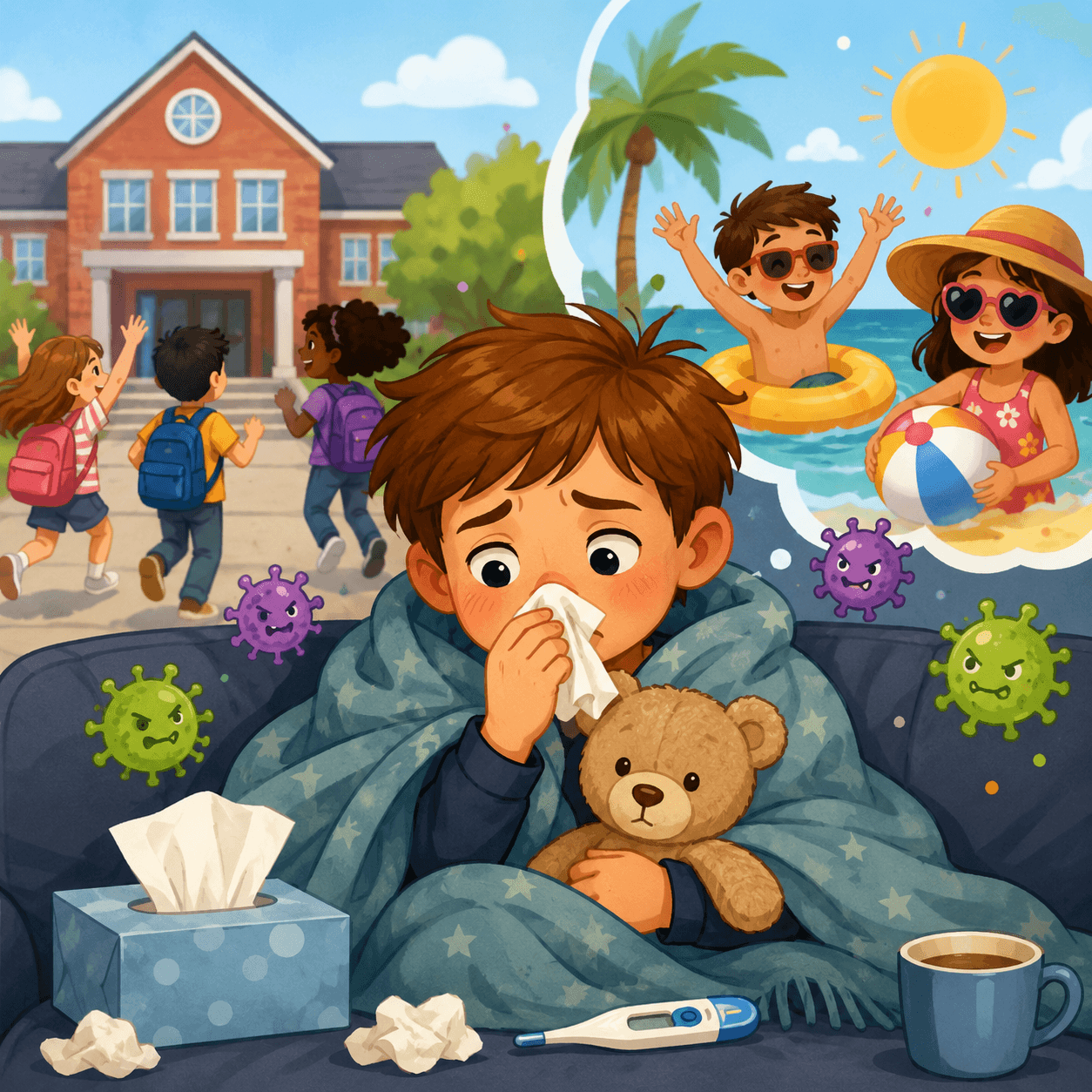
Every year, around late spring and early summer, many parents start noticing the same thing: their child suddenly comes down with a cold, cough, sore throat, congestion, or fever right as the school year is wrapping up.
After making it through most of the year, it can feel frustrating to have one more illness show up just before summer break begins. In reality, this time of year tends to be one of the more common periods for kids to get sick.
There are a few reasons why.
Months of Germ Exposure Start Adding Up
By the end of the school year, children have spent months in classrooms, sports, group activities, playgrounds, and after-school programs surrounded by other kids. Even healthy immune systems can get worn down after constant exposure to viruses and bacteria over time.
Younger children are especially vulnerable because their immune systems are still developing and learning how to respond to new germs.
Even if your child has stayed relatively healthy all year, the buildup of exposure combined with exhaustion and schedule changes can finally catch up to them.
End-of-Year Burnout Is Real for Kids Too
The final weeks of school are often packed with:
- Testing
- School events
- Sports
- Performances
- Later bedtimes
- Busy weekends
- Increased screen time
Kids may not always say they are tired, but their bodies feel it. Less sleep and more stress can weaken the immune system, making it easier for illnesses to spread.
Sometimes what looks like “getting sick out of nowhere” is really the result of weeks of physical exhaustion.
Seasonal Allergies Can Make Things Worse
Spring allergies can also play a major role this time of year. Pollen levels rise, kids spend more time outside, and symptoms like congestion, coughing, watery eyes, and sore throats become more common.
Because allergy symptoms can look very similar to colds, it is easy to confuse the two.
In some cases, allergies can also irritate the airways, making children more susceptible to secondary illnesses such as sinus or ear infections.
Weather Changes Affect Routines
Warmer weather usually means more outdoor activity, but it can also disrupt normal routines.
Children may:
- Stay up later
- Forget to drink enough water.
- Eat differently
- Spend more time around large groups.
- Transition between air conditioning and heat frequently
These small changes may not seem important on their own, but together they can affect how well a child’s body handles stress and fights off illness.
What Parents Can Do
While it is impossible to prevent every illness, a few simple habits can help support your child’s immune system during this busy time of year:
- Prioritize consistent sleep schedules.
- Encourage regular hand washing.
- Keep kids hydrated
- Focus on balanced meals and snacks.
- Limit overly packed schedules when possible.
- Monitor allergy symptoms early.
Most end-of-school-year illnesses are mild and improve with rest, fluids, and time. However, parents should contact their pediatrician if symptoms become severe, last longer than expected, or include difficulty breathing, persistent fever, dehydration, or unusual fatigue.
Looking Ahead to Summer
The transition into summer is exciting for children and families, but it is also a period when routines, energy levels, and exposure to germs shift quickly.
If your child seems to catch “one last bug” before school ends, they are definitely not alone. It is something pediatric offices see every single year.
The good news is that with rest, recovery, and a slower summer pace, most kids bounce back quickly and are ready to enjoy the season ahead.
At Holly Springs Pediatrics, we’re here to support your family’s health all year round. If you have any questions or concerns about your child’s skin, give us a call. We’re happy to help you find the best ways to keep your little one comfortable and healthy this season.
Holly Springs Pediatrics is committed to providing quality care to your kids at all times on a wide array of subjects. For more information or to get in contact with our office, call (919) 249-4700 to schedule an appointment.