
Preventing Swimmer’s Ear During Pool Season: What Parents Need to Know
June 1, 2026
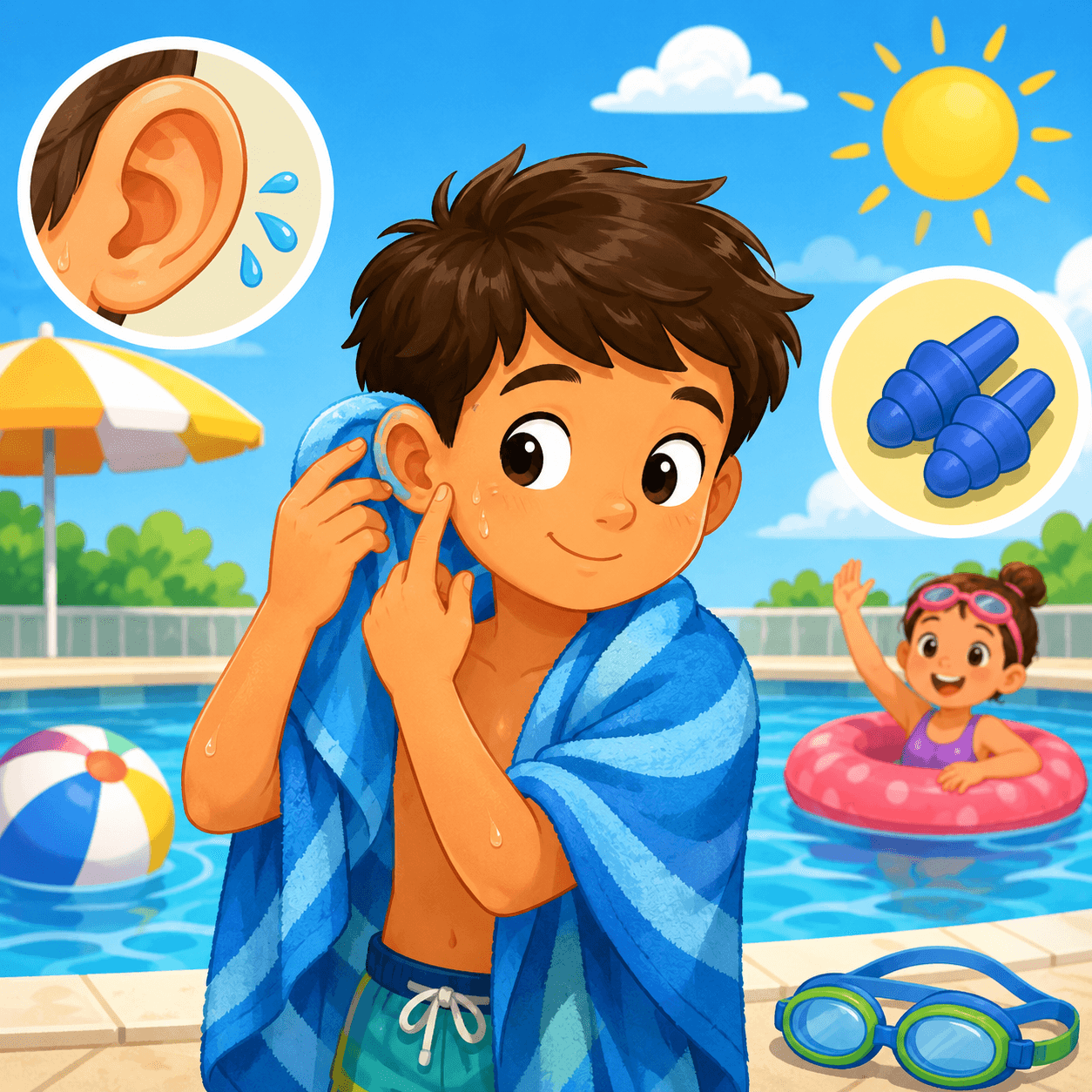
Summer is here, and that means more time spent at the pool, beach, water park, and splash pad. While swimming is a great way for children to stay active and have fun, it can sometimes lead to a common summertime condition known as swimmer’s ear.
Understanding what swimmer’s ear is, how to prevent it, and when to seek medical care can help keep your child healthy and enjoying the water all season long.
What Is Swimmer’s Ear?
Swimmer’s ear is an infection of the outer ear canal, the passage that runs from the outside of the ear to the eardrum. It often develops when water becomes trapped in the ear after swimming, creating a moist environment where bacteria can grow.
Although it is commonly associated with swimming, swimmer’s ear can happen anytime moisture remains in the ear canal for an extended period.
Common Symptoms of Swimmer’s Ear
Parents should watch for signs such as:
- Ear pain or discomfort
- Itching inside the ear
- Redness around the ear canal
- Tenderness when touching or pulling the ear
- A feeling of fullness in the ear
- Drainage from the ear
- Temporary hearing difficulty
Symptoms may start mild but can become more painful if left untreated.
Why Are Children More Likely to Get It?
Children often spend long periods of time in the water during the summer months. Frequent swimming can wash away the protective earwax that helps keep the ear canal healthy. When moisture remains trapped inside the ear, bacteria have a greater chance to grow and cause an infection.
Tips to Help Prevent Swimmer’s Ear
The good news is that there are several simple steps parents can take to reduce the risk.
Dry Ears Thoroughly After Swimming
After your child gets out of the water, gently dry the outer ears with a towel. Encourage them to tilt their head to each side to help excess water drain out naturally.
Avoid Putting Objects in the Ear
Cotton swabs, fingers, and other objects can irritate the ear canal and remove protective earwax. This can increase the risk of infection.
Consider Ear Protection
For children who swim frequently or have a history of swimmer’s ear, well-fitting swim earplugs may help reduce water exposure.
Take Breaks From the Water
If your child spends several hours swimming, taking periodic breaks can help the ears dry out between swims.
Keep Ears Healthy
If your child has eczema, allergies, or other skin conditions affecting the ears, managing those conditions can help reduce irritation and lower the risk of infection.
When Should You Call the Pediatrician?
Contact your pediatrician if your child experiences:
- Ear pain that does not improve
- Ear drainage
- Swelling around the ear
- Fever
- Hearing changes
- Symptoms that worsen after a day or two
Early treatment can often relieve discomfort quickly and prevent the infection from becoming more serious.
Enjoy a Healthy Summer in the Water
Swimming is one of the best parts of summer for many children. By taking a few simple precautions, parents can help prevent swimmer’s ear and keep their kids comfortable and active all season long.
We wish your family a safe, healthy, and fun-filled summer.
At Holly Springs Pediatrics, we’re here to support your family’s health all year round. If you have any questions or concerns about your child’s skin, give us a call. We’re happy to help you find the best ways to keep your little one comfortable and healthy this season.
Holly Springs Pediatrics is committed to providing quality care to your kids at all times on a wide array of subjects. For more information or to get in contact with our office, call (919) 249-4700 to schedule an appointment.